Lede
Microsoft has pulled out of its deal to lease capacity at a planned artificial intelligence data center in Loughton, Essex, after the local power grid said the site could not receive enough electricity until the 2030s. Microsoft confirmed the move on Monday, October 19, following weekend reporting by The Sunday Telegraph. It is the latest sign that the AI boom’s biggest bottleneck is not chips or software — it is power.
What happened
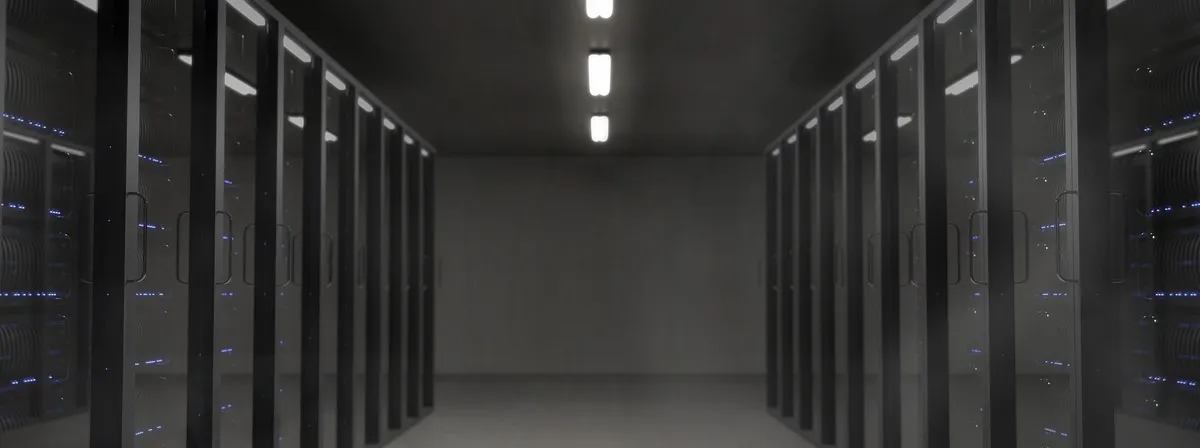
The Loughton site was to be the first U.K. data center for Nscale, a British AI infrastructure company Microsoft had chosen as an anchor partner. Announced in September 2025 alongside Microsoft’s $15 billion investment in U.K. AI infrastructure, the deal would have Microsoft lease a 50-megawatt facility housing roughly 23,000 Nvidia GB300 chips to power Microsoft Azure services. Nscale billed it as the largest “U.K. sovereign” AI data center.
But grid access never materialized. UK Power Networks told Nscale the site could not expect a connection until the early 2030s — roughly a decade of delay for a facility due to go live by year’s end. Britain’s data-center grid-connection queue now totals about 73 gigawatts, per CoinDesk.
An Nscale spokesperson told Reuters the relationship with Microsoft “remains strong and long-term,” adding: “We remain committed to both the Loughton project and the UK and we are exploring alternative power sources for the site, in addition to other expansion sites in the UK.” Microsoft said it remains committed to the broader Nscale partnership and that the withdrawal concerns a single site. Nscale says its other Microsoft contracts — in Portugal, the U.S. and Norway — are unaffected.
The setback lands as Nscale prepares a U.S. initial public offering reportedly targeting up to $35 billion. Some investors have since suggested scaling that back to $16–19 billion, per Data Center Dynamics. Nscale, which grew out of bitcoin mining firm Arkon Energy and counts Nvidia among its backers, competes with neoclouds like CoreWeave, Nebius, Crusoe and Lambda.
This is not Nscale’s first lost tenant. In April, OpenAI withdrew from a U.K. Stargate infrastructure project with Nscale, blaming high energy costs and regulatory uncertainty. The Wall Street Journal notes investors have also been punishing AI infrastructure stocks — indebted neoclouds like CoreWeave in particular — amid fears that rising interest rates will lift the cost of the debt financing the AI buildout.
Why it matters for small businesses
The lesson for SMB owners is straightforward: the constraint on the AI services you rent is increasingly physical. When a 50-megawatt Azure site can be derailed by a grid-connection queue, it means cloud AI capacity in your region is not guaranteed — and scarcity shows up as higher prices and thinner availability for everyone, including small teams.
Three implications are worth tracking:
- Cost pressure flows downhill. Providers that overpay for scarce power and delayed capacity do not absorb those costs quietly. SMBs on usage-based AI plans should watch for price changes and regional capacity limits, and understand how their AI spend is structured before they lock in a vendor. Our guide to per-seat vs. usage-based AI pricing explains how to budget for AI before costs surprise you.
- Concentration risk is real. A handful of suppliers — Microsoft, Anthropic and their neocloud partners — dominate the AI capacity pipeline. If your business depends on one provider in one region, a single stalled project is a reminder to keep fallback options. For teams that can, self-hosting models like LocalAI on your own server offer a hedge against cloud-only dependence.
- Markets are scrutinizing the AI buildout. The CoreWeave selloff and investor pushback on Nscale’s IPO valuation suggest the “AI capacity is limitless” story is being repriced. Small businesses should plan AI budgets on the assumption that compute costs can move — not just down.
Pricing, availability, and what to do next
No pricing changes were announced with this news, and Microsoft’s Azure services are unaffected — the withdrawal concerns one future site, not existing capacity. Microsoft’s other Nscale agreements in Portugal, the U.S. and Norway remain in place, though Nscale’s Norway project is also reportedly behind schedule.
Practical steps for small businesses:
- Audit where your AI workloads actually run: which providers, which regions, and what happens if one region gets constrained.
- For steady, high-volume AI workloads, compare reserved-capacity pricing against pay-as-you-go before your next contract renewal.
- Keep at least one alternative model provider configured in your AI stack so a single vendor’s outage or price hike does not halt your business.
- If you operate in the U.K. or Europe, watch local capacity news — data residency and latency options may tighten before they improve.
Sources
- The Wall Street Journal — “Microsoft Pulls out of Nscale U.K. Data-Center Deal Over Power-Supply Issues” (Oct. 19, 2026)
- Reuters (via The Indian Express) — “Microsoft pulls out of UK data centre deal with Nscale” (Oct. 19, 2026)
- AFP (via The Malaysian Reserve) — “Microsoft exits data centre deal in blow to UK AI ambitions” (Oct. 19, 2026)
- CoinDesk — “Bitcoin mining offshoot loses Microsoft AI deal as power delay stretches into 2030s” (Oct. 19, 2026)
- Data Center Dynamics — “Microsoft pulls out of delayed Nscale data center in Loughton, Essex” (Oct. 15, 2026)
- The Times — “Microsoft pulls out of Nscale data centre deal” (Oct. 19, 2026)